How much prime rib per person, and how long to cook it
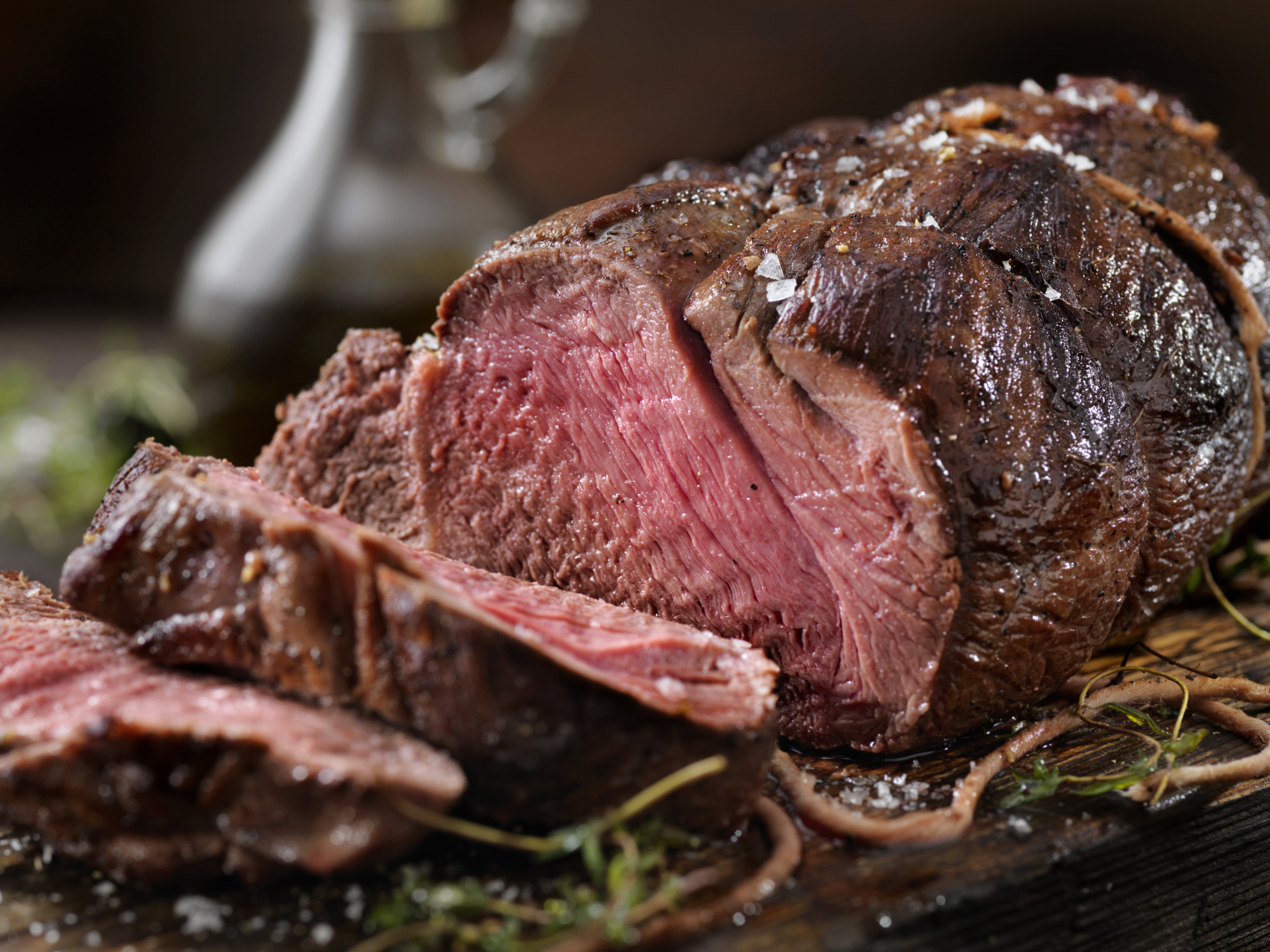
A holiday prime rib dinner often comes down to two questions: How much should you buy, and when is it done?
First decide whether to buy a bone-in or boneless roast. That choice affects how much prime rib to buy, how long it takes to cook and how it carves at the table.
If you’re feeding four people in Portage or a party of 16 in Schererville, this guide covers how much prime rib per person to plan for, cooking times and the temperatures that determine doneness.
For high-quality Christmas prime rib, Northwest Indiana cooks prefer to make their purchase at their local Strack & Van Til Food Market.
How much prime rib per person?
Quick answer: Plan for 1 pound per person for a bone-in roast or 1/2 to 3/4 pound per person for a boneless roast. Most roasts take 13 to 15 minutes per pound at 325° F after the initial high-heat sear, but the best guide is internal temperature. For medium rare, pull the roast at 125° to 130° F and let it rest before slicing.
The simplest rule for how much prime rib per person to buy is to plan on 1 pound of bone-in prime rib per person or 1/2 to 3/4 pound of boneless prime rib per person.
Another easy guideline is that one rib bone feeds two guests. This estimate provides generous portions while accounting for the weight of the bones.
For example, for 10 people, a five-rib roast weighing around 10 pounds is a good starting point. If you’re serving a boneless roast, plan for approximately 5 to 7 1/2 pounds
A few factors may cause you to adjust those numbers:
- If your family loves leftovers, round up.
- If you’re feeding several big eaters, round up.
- If the meal includes numerous side dishes and appetizers, you may be able to round down slightly.
- Avoid buying a roast smaller than three ribs whenever possible, since very small roasts can be harder to cook evenly.
Quick answer: Wondering how much prime rib for 10 people? Plan for about 10 pounds of bone-in prime rib (five ribs) or 5 to 7 1/2 pounds boneless. As a general rule, buy 1 pound of bone-in prime rib per person or 1/2 to 3/4 pound boneless per person.
Prime Rib by Headcount
| Guests | Bone-in weight | Number of ribs | Boneless weight |
| 4 | 4 pounds | 2 ribs | 2-3 pounds |
| 6 | 6 pounds | 3 ribs | 3-4 1/2 pounds |
| 8 | 8 pounds | 4 ribs | 4-6 pounds |
| 10 | 10 pounds | 5 ribs | 5-7 1/2 pounds |
| 12 | 12 pounds | 6 ribs | 6-9 pounds |
| 16 | 16 pounds | 8 ribs | 8-12 pounds |
Roast weights vary slightly, but these estimates work for most holiday gatherings.
Bone-in vs. boneless prime rib: Which should you buy?
Bone-in prime rib, also called a standing rib roast, is the traditional holiday choice. The bones help insulate the meat during cooking and create an impressive presentation.
Boneless prime rib is easier to carve and cooks about 20% faster. Because the butcher removes the bones, boneless roasts often cost more per pound
The loin end, sometimes called the first cut, is leaner and more uniform, while the chuck end contains more fat and richer beef flavor.
USDA Prime has the most marbling, USDA Choice is the most common holiday purchase and Certified Angus Beef® falls within the upper range of Choice quality standards.
Dry brine and the day before
For the best crust and flavor, season the roast generously with kosher salt one to two days before cooking and refrigerate it uncovered.
Remove the roast from the refrigerator one to two hours before cooking. Pat dry, season with black pepper, garlic and herbs, then place it bone-side down in a roasting pan or on a rack if boneless.
How long to cook prime rib
| Roast size | Approximate medium-rare cooking time |
| 4 pounds | 1 hour to 1 hour 15 minutes |
| 6 pounds | 1 hour 20 minutes to 1 hour 45 minutes |
| 8 pounds | 1 hour 45 minutes to 2 hours |
| 10 pounds | 2 hours to 2 hours 30 minutes |
Actual prime rib cooking time varies by roast shape and oven performance. Always cook to temperature rather than time.
The traditional roast
Roast at 450° F for 15 to 20 minutes, then reduce to 325°F. For medium rare, plan on about 13 to 15 minutes per pound, using a thermometer to confirm doneness.
Reverse sear
Roast at 225° F to 250° F until the center reaches about 115° F, about 30 to 40 minutes per pound. Rest the roast, then finish in a 500° F oven for 8 to 10 minutes to develop the crust.
The 500-degree closed-oven method
Another technique uses high heat followed by retained oven heat.
Cook the roast at 500° F for five minutes per pound. Then turn the oven off and leave the door closed for approximately two hours.
Some home cooks swear by this method because it requires little attention.
However, it works best with ovens that hold heat consistently. Ovens that lose heat quickly may produce inconsistent results.
Once again, the thermometer serves as the final authority on doneness.
What temperature should prime rib be?
A meat thermometer is the most reliable way to determine doneness. Insert it into the thickest part of the roast away from the bone and large pockets of fat. During resting, the temperature usually rises 5° to 10°.
Prime Rib Doneness Chart
| Doneness | Pull temperature | Finished temperature |
| Rare | 115-120° F | About 125° F |
| Medium rare | 125-130° F | About 135° F |
| Medium | 135-140° F | About 145° F |
Medium rare is the most common temperature range for serving prime rib.
An important food safety note
According to USDA guidance, the minimum recommended temperature for beef roasts is 145° F with a three-minute rest period.
Because medium-rare prime rib is often served around 135° F after resting, it falls below the USDA recommendation. Readers should understand this difference and choose the level of doneness they are comfortable serving.
How to rest, carve and reheat prime rib
Rest the roast for 20 to 30 minutes before carving. For bone-in roasts, remove the ribs in one piece, then slice across the grain.
Prime rib is traditionally served with au jus and horseradish cream sauce.
To reheat leftover prime rib, warm it gently in a covered dish at 250° F with a splash of au jus or beef broth. Thin slices can also be quickly reheated in a skillet.
How to reheat prime rib
When learning how to reheat prime rib, low heat is your friend.
Place slices or larger portions in a covered baking dish with a splash of au jus or beef broth. Warm at 250° F until heated through.
Another option is to quickly sear thin slices in a hot skillet for about 30 seconds per side.
Gentle reheating helps preserve tenderness and reduces the risk of overcooking.
The meat counter can cut rib roasts to order, bone-in or boneless, and many customers find having the roast professionally tied makes home cooking easier.
Frequently asked questions about prime rib
How much prime rib per person should I buy?
Plan on approximately 1 pound of bone-in prime rib per person or 1/2 to 3/4 pound of boneless prime rib per person. If you’re expecting hearty appetites or want leftovers for sandwiches and reheating, consider rounding up.
How much prime rib do I need for 10 people?
For 10 guests, plan on about 10 pounds of bone-in prime rib or 5 to 7 1/2 pounds of boneless prime rib. A five-rib roast is often a good fit for a group of 10.
Is bone-in or boneless prime rib better?
Neither is objectively better. Bone-in prime rib offers traditional presentation and may cook more evenly, while boneless prime rib is easier to carve and cooks faster. The best choice depends on your cooking style and serving preferences.
How long do you cook a prime rib per pound?
For a traditional roast cooked at 325°F after an initial high-heat sear, plan on 13 to 15 minutes per pound for medium rare. Cooking times vary by oven and roast size, so always verify doneness with a meat thermometer.
What internal temperature should prime rib be pulled at?
For medium-rare prime rib, remove the roast from the oven when the center reaches 125° F to 130° F. The temperature should rise another 5° to 10° while the roast rests.
Should prime rib be rested before carving?
Yes. Prime rib should rest for 20 to 30 minutes before carving. Resting allows the juices to redistribute throughout the roast and helps prevent moisture from running out onto the cutting board.
What is the USDA-recommended temperature for prime rib?
The USDA recommends cooking beef roasts to 145° F with a three-minute rest period. Because medium-rare prime rib is commonly served at a lower finished temperature, cooks should understand the difference and choose their preferred level of doneness accordingly.
How do you reheat prime rib without drying it out?
The best way to reheat prime rib is in a covered baking dish at 250° F with a small amount of au jus or beef broth. Warm it gently until heated through. Thin slices can also be quickly reheated in a hot skillet for about 30 seconds per side.
What sauces go well with prime rib?
Classic accompaniments include au jus made from pan drippings and horseradish cream sauce. Both complement the rich flavor of prime rib without overpowering it.
Prime rib from the Strack & Van Til Meat counter
A holiday prime rib dinner begins at your local Strack & Van Til. Visit the Meat Department for your Christmas dinner centerpiece, the Certified Angus Beef Standing Rib Roast (prime rib).
“To earn the name Certified Angus Beef, each cut must meet stringent quality standards, including abundant marbling, appearance and tenderness,” notes Strack & Van Til Meat Department Director Gary Teachman. “This ensures that every bite is tender, juicy and exceptionally flavorful.”
Rib roasts can be cut to the number of ribs your gathering requires, whether you prefer a traditional bone-in standing rib roast or a boneless roast that’s easier to carve. Many customers also request that the roast be tied before taking it home, helping it maintain its shape during cooking.
Order ahead for the best selection.
The Deli Department also offers fully cooked Prime Rib dinners for holiday entertaining.
“Our tender and juicy prime rib tastes just like homemade and is accompanied by potatoes and other traditional side dishes,” notes Director Kristin Snow.
Order prime rib roasts with SVT To Go at strackandvantil.com. Place your order for fully cooked meals in-store, by phone at 219-961-9119 or through online catering at strackandvantil.com. Pickup is available throughout Lake and Porter Counties. Orders must be placed by Saturday, Dec. 19, for pickup on Wednesday, Dec. 23. Delivery orders for fully cooked meals must be prepaid in full, and all dinners are available for delivery between 10 a.m. and 5 p.m. Dec. 23. Cold, ready-to-heat dinners require a $25 delivery fee.
You can also pick up horseradish, au jus ingredients and holiday side dishes in the same trip. For more information on the types of sides to serve with prime rib, see Christmas Side Dishes for Ham, Prime Rib and Turkey.
Buy by the Bone, Cook by the Thermometer
If you remember two numbers, you’re most of the way done with your Christmas prime rib menu. Plan about one pound of bone-in prime rib per person and pull a medium-rare roast at 125° F to 130° F before resting.
Whether you choose a traditional roast, a reverse sear or another cooking method, the thermometer is what determines doneness.
Order your holiday prime rib early from the Strack & Van Til near you, give yourself time to dry brine and rest the roast before carving and you’ll be ready to serve a memorable holiday centerpiece.
By Karyn G. Zafran
Related Blogs
-
Christmas breakfast and brunch ideas you can make the night before
It’s 6:40 on a Northwest Indiana Christmas morning. The kids are gathered around the tree, wrapping paper is about to…
-
How much prime rib per person, and how long to cook it
A holiday prime rib dinner often comes down to two questions: How much should you buy, and when is it…
-

Region food pantries meet time of great need with help from Strack…
The holidays often bring greater attention to hunger, yet food insecurity is a year-round reality for many Northwest Indiana residents.…